Disinfecting High-Touch Surfaces in the Workplace: A Practical Guide
Germs spread most easily through the surfaces many people touch every day. A focused high-touch disinfection routine is one of the simplest and most effective ways to keep a workplace healthier.
Cleaning vs. sanitizing vs. disinfecting
- Cleaning removes dirt and many germs from a surface using soap or detergent and water. It should always come first.
- Sanitizing reduces the number of germs to a safer level, often used on food-contact surfaces.
- Disinfecting uses an EPA-registered product to kill germs on surfaces. It works best on surfaces that have already been cleaned.
Public health guidance from the CDC recommends regular cleaning for most areas and disinfection where there is higher risk, such as when someone is sick or in healthcare settings.

The most important high-touch surfaces
- Door handles, push plates and lever handles
- Light switches and elevator buttons
- Restroom fixtures, faucets, flush handles and dispensers
- Break room appliances, coffee machines and refrigerator handles
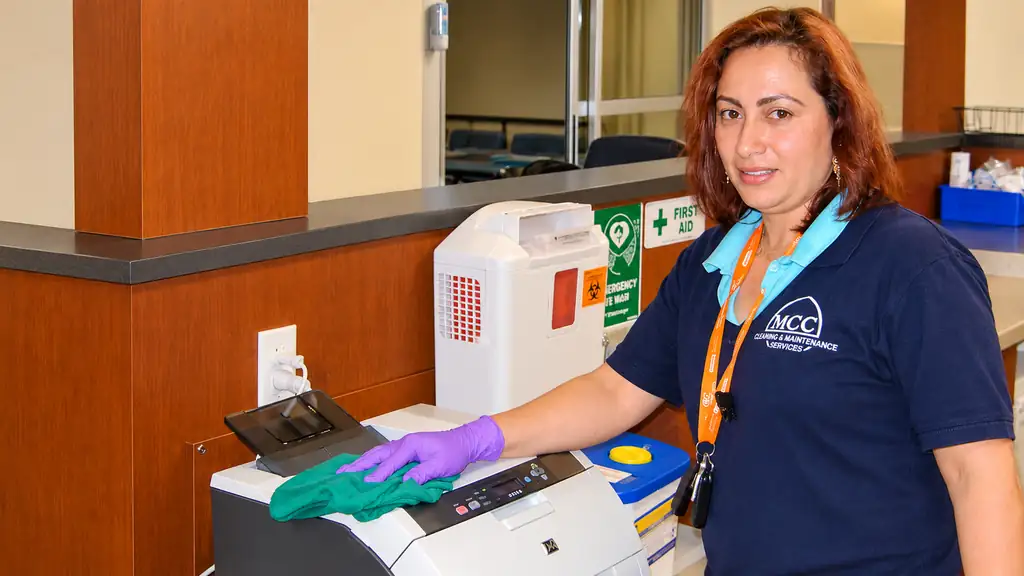
- Shared desks, keyboards, phones and printers
- Conference room tables and chair arms
- Handrails, reception counters and sign-in tablets
How often should they be disinfected?
In most offices, high-touch surfaces should be cleaned and disinfected at least once a day, usually by the night crew. Busy buildings, clinics and shared workspaces benefit from extra wipe-downs during the day by a day porter.
Doing it right
- Clean visible dirt first.
- Use an EPA-registered disinfectant suited to the surface.
- Leave the product wet for the full contact time on the label.
- Use separate, color-coded cloths for restrooms and other areas.
- Follow the label for protective equipment and ventilation.
Terminal cleaning for medical facilities
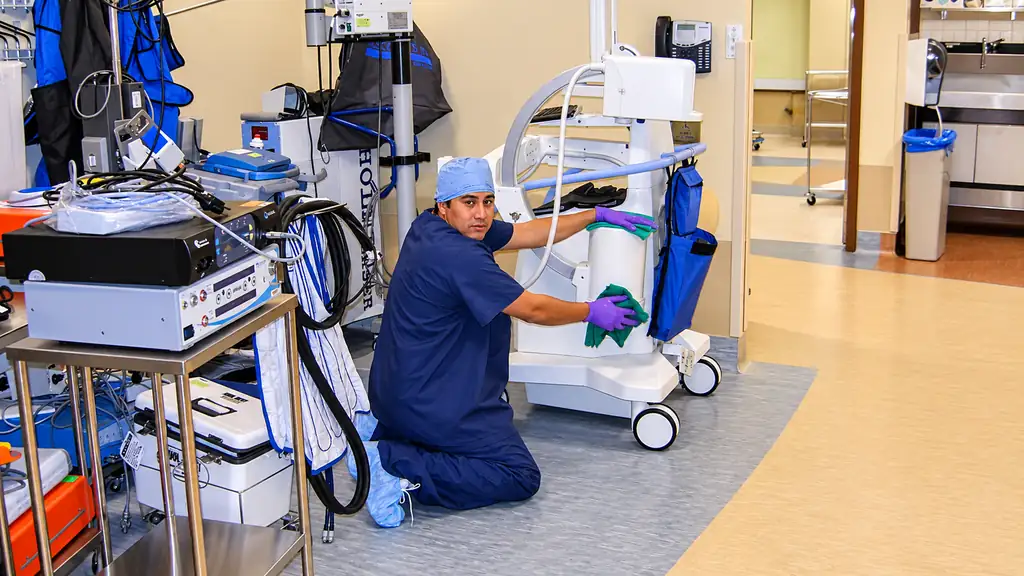
Medical and dental offices, surgery centers and clinics need a higher standard. Terminal cleaning is a thorough top-to-bottom cleaning and disinfection of an exam room, procedure room or patient area, following the facility’s infection-control protocols. MCC provides professional terminal cleaning and sanitizing services for medical facilities as part of our building maintenance services.
Balancing disinfection and green cleaning
Disinfect where it matters most and use green-certified cleaners elsewhere. This approach protects health without overusing harsh chemicals. Read the benefits of green cleaning and our restroom cleaning checklist for more.
Building a written disinfection plan
- List the high-touch surfaces in each area of your building.
- Decide how often each is cleaned and disinfected, and by whom.
- Choose products and note their contact times.
- Set extra steps for illness outbreaks or flu season.
- Train staff and check the work regularly.
Combine the plan with a regular cleaning schedule. Our guide on how often an office should be cleaned covers the rest.
Disinfection services from MCC
Our crews follow CDC guidance for cleaning and disinfecting commercial facilities and can build a disinfection plan for your building. Learn about our health, safety and environment approach and janitorial cleaning services, or schedule a walkthrough.
Frequently asked questions
Is sanitizing the same as disinfecting?
No. Sanitizing lowers the number of germs to a safer level, while disinfecting uses an EPA-registered product to kill germs on a surface when used according to the label.
How often should office door handles be disinfected?
At least once a day in most offices, and more often in busy buildings, clinics and during cold and flu season.