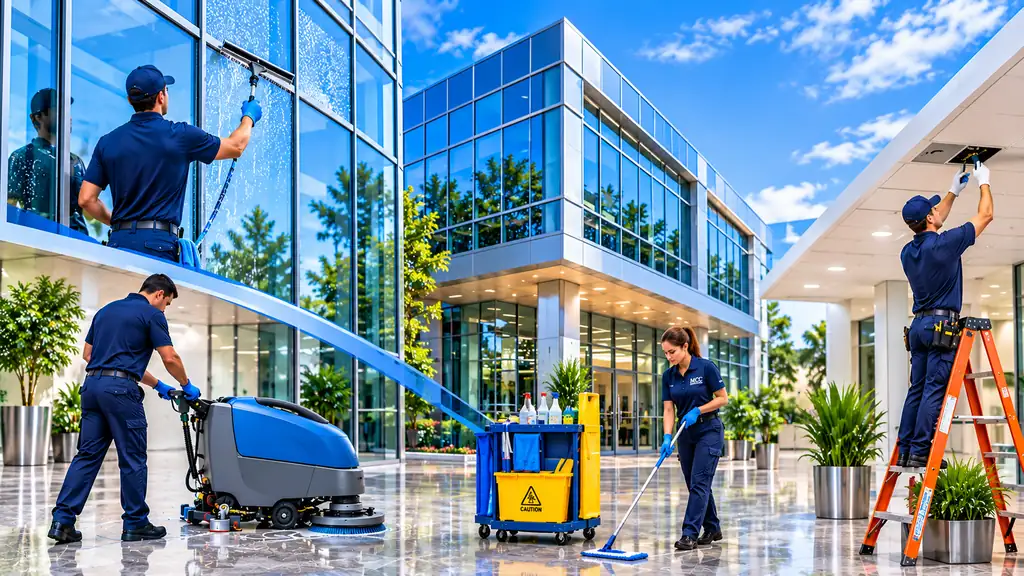
How Janitorial Services Support LEED Certification for Existing Buildings
Many building owners think LEED is only about construction. For existing buildings, how you operate and maintain the facility matters too, and your janitorial program is a big part of that.
LEED for existing buildings in brief
LEED (Leadership in Energy and Environmental Design) is a green building rating system run by the U.S. Green Building Council. The rating for existing buildings, often called Operations and Maintenance (O+M), looks at how a building is run day to day, including indoor environmental quality, materials and waste.
Where cleaning fits in
Requirements change between LEED versions, so always check the current rating system with your LEED consultant. In general, cleaning programs can contribute in these areas:
- Green cleaning policy: a written policy covering products, equipment, procedures, training and how the program is reviewed.
- Green cleaning products and materials: buying cleaning chemicals, paper products and trash liners that meet recognized environmental standards.
- Equipment: using equipment that reduces noise, dust and chemical use, such as HEPA vacuums and efficient floor machines.
- Indoor environmental quality: entryway systems such as walk-off mats, and procedures that protect indoor air.
- Waste and recycling: recycling programs and tracking of waste streams.
Documentation is everything
LEED reviewers look for proof. A good cleaning partner helps you keep:
- Your written green cleaning policy
- Purchasing records for products and supplies
- Equipment lists and maintenance logs
- Training records for cleaning staff
- Periodic audits and occupant feedback
Practical steps for building managers
- Talk to your LEED consultant about which credits you are targeting.
- Ask your cleaning provider for their green cleaning policy and product list.
- Switch to certified products and paper supplies. MCC’s sister company Janiline can supply these at competitive prices.
- Upgrade entrance matting and vacuum filtration.
- Set up or improve recycling.
- Train staff and schedule regular reviews.
Benefits beyond the plaque
Even if you are not pursuing certification, these practices improve indoor air, protect occupants and can reduce operating costs. Read 7 benefits of green cleaning for commercial buildings to learn more.
A simple green cleaning policy outline
If you do not have a written policy yet, this structure is a practical place to start. Your LEED consultant can confirm what your target credits require.
- Purpose and scope: which buildings and areas the policy covers.
- Products: standards for cleaning chemicals, paper products and liners.
- Equipment: standards for vacuums, floor machines and other powered equipment.
- Procedures: dilution, storage, entryway care, spill response and hand hygiene.
- Training: how cleaning staff are trained and how often.
- Occupant communication: how occupants can give feedback.
- Review: how and when the program is audited and updated.
Pair this with a dependable janitorial and commercial cleaning plan so the policy is followed every day.
A certified green business partner
MCC is a Certified Green Business and has run its Green Care Program since 2008. Our green maintenance program can help buildings earn LEED points in the existing building operations and maintenance category. Learn more about MCC, explore our green cleaning solutions, or contact us to discuss your building.